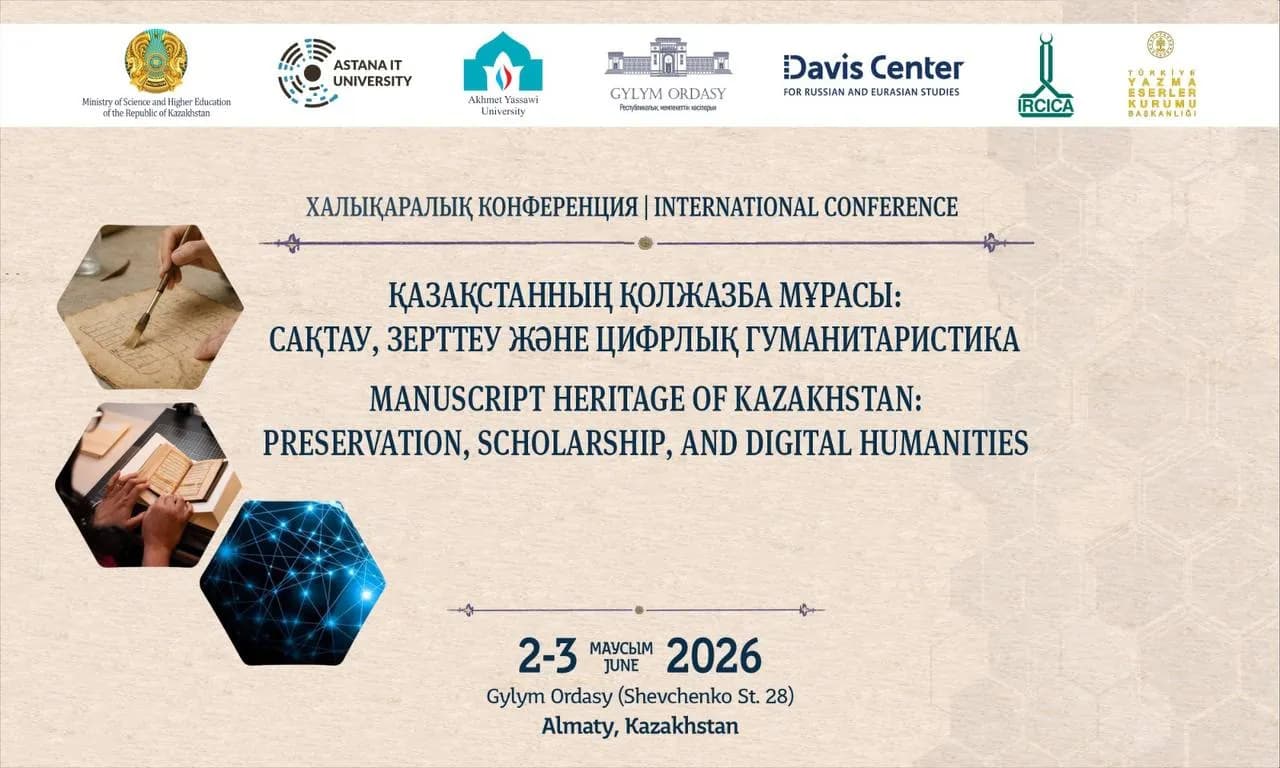
From June 2 to 3, 2026, Almaty will host the international conference "Kazakhstan's Manuscript Heritage: Preservation, Research, and Digital Humanities," reports Todayinfo. This large-scale scientific event is a significant academic initiative aimed at preserving manuscript collections in Kazakhstan, introducing them into scientific circulation, converting them into digital format, and strengthening international cooperation in this field.
The conference program will feature scientific papers from over 50 scholars and industry experts from eight countries, including Kazakhstan, Turkey, USA, UK, Uzbekistan, Russia, Cuba, and Azerbaijan. Participants include leading scholars and specialists from Harvard University, Oxford University, Indiana University, the Turkish Manuscripts Authority, the Research Centre for Islamic History, Art and Culture (IRCICA), scientific institutes of the Academy of Sciences of Uzbekistan, Al-Farabi Kazakh National University, Abai Kazakh National Pedagogical University, Astana IT University, the "Gylym Ordasy" Republican State Enterprise, and Kazakhstan's national libraries and central archives.
The conference will prioritize a multifaceted consideration of the manuscript heritage in Kazakhstan and Central Asia. The program covers issues such as introducing medieval Muslim works into scientific circulation, analyzing Arabic, Persian, and Turkic sources related to the Kazakh steppe, and uncovering the thematic and historical features of Arabic manuscripts in Kazakhstan.
In addition, a separate major focus of the conference will be the application of digital humanities and artificial intelligence technologies. Researchers from Astana IT University will present papers on the development of OCR systems and language models for recognizing Chagatay texts. Foreign specialists will explain the scientific and practical aspects of training optical text recognition models based on corpora of metric books and historical documents. Scholars from the USA and Europe will share their experience in working with Islamic manuscript collections in US libraries, digitizing written heritage along the Silk Road, and creating electronic catalogs. These directions create conditions for integrating the traditional field of manuscript studies with data science and digital humanities.
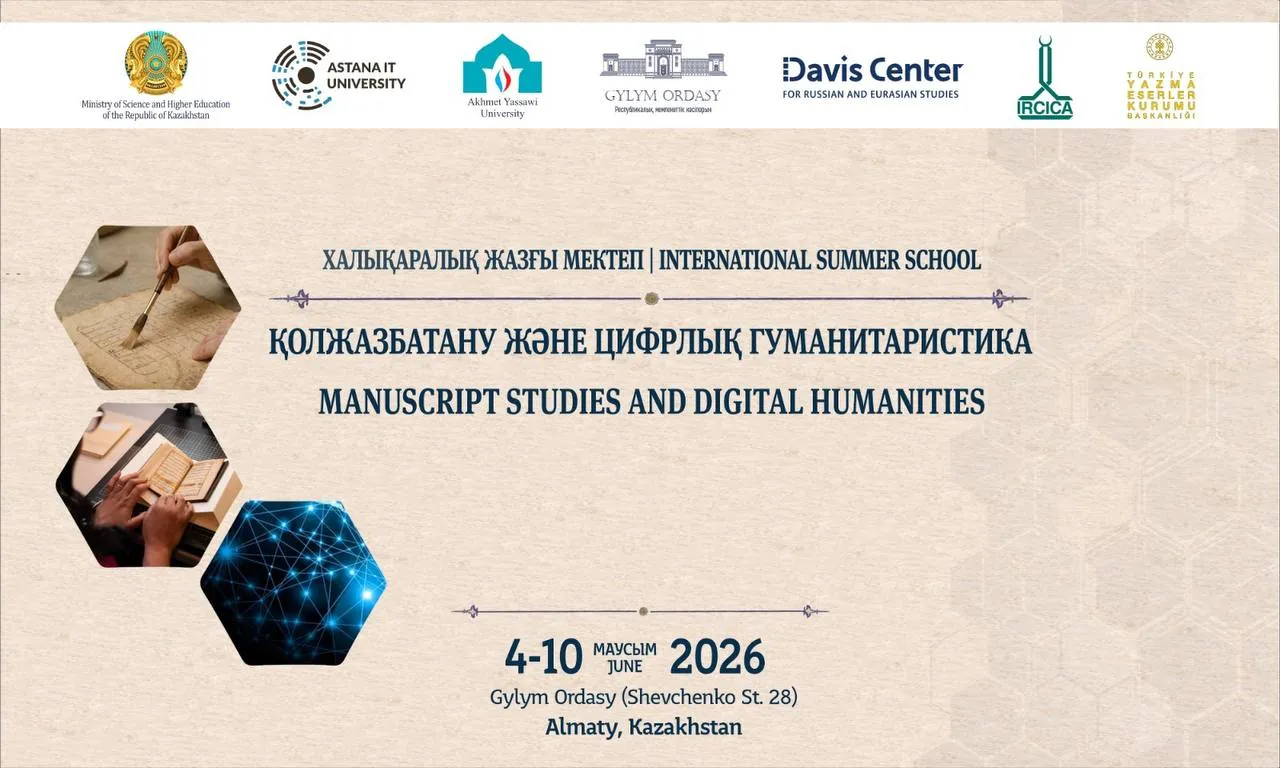
Alongside the conference, an international summer school "Manuscript Studies and Digital Humanities" will be organized from June 4 to 10. The summer school will involve at least 14 leading specialists and instructors from Kazakhstan, Turkey, USA, and Japan. Among them are experts from Tokyo University of Foreign Studies, Harvard University, the Turkish Manuscripts Authority, the IRCICA center, Indiana University, Al-Farabi Kazakh National University, the International Kazakh-Turkish University named after H.A. Yasawi, national libraries, and the restoration centers of "Gylym Ordasy."
The summer school program consists of several key modules. The first module is dedicated to the methodology of teaching the Chagatay language and linking Chagatay text corpora with Kazakh studies. In the second module, practices of conservation, restoration, and passive preservation related to Turkic and Islamic manuscripts will be taught. The third module will demonstrate the culture of working with Islamic sources in libraries and scientific centers of the USA and Turkey, the experience of cataloging manuscripts and rare books, and describing them in accordance with international standards.
Both events are being held within the framework of the implementation of the program of the Ministry of Science and Higher Education of the Republic of Kazakhstan BP28712621 "Kazakhstan's Manuscript Heritage: Registration, Restoration, Scientific Cataloging, Digitalization, and Comprehensive Codicological Studies."
The address for the conference and summer school is: Almaty, Shevchenko Street, 28, Grand Conference Hall of "Gylym Ordasy" and the International Hall of the Central Scientific Library.