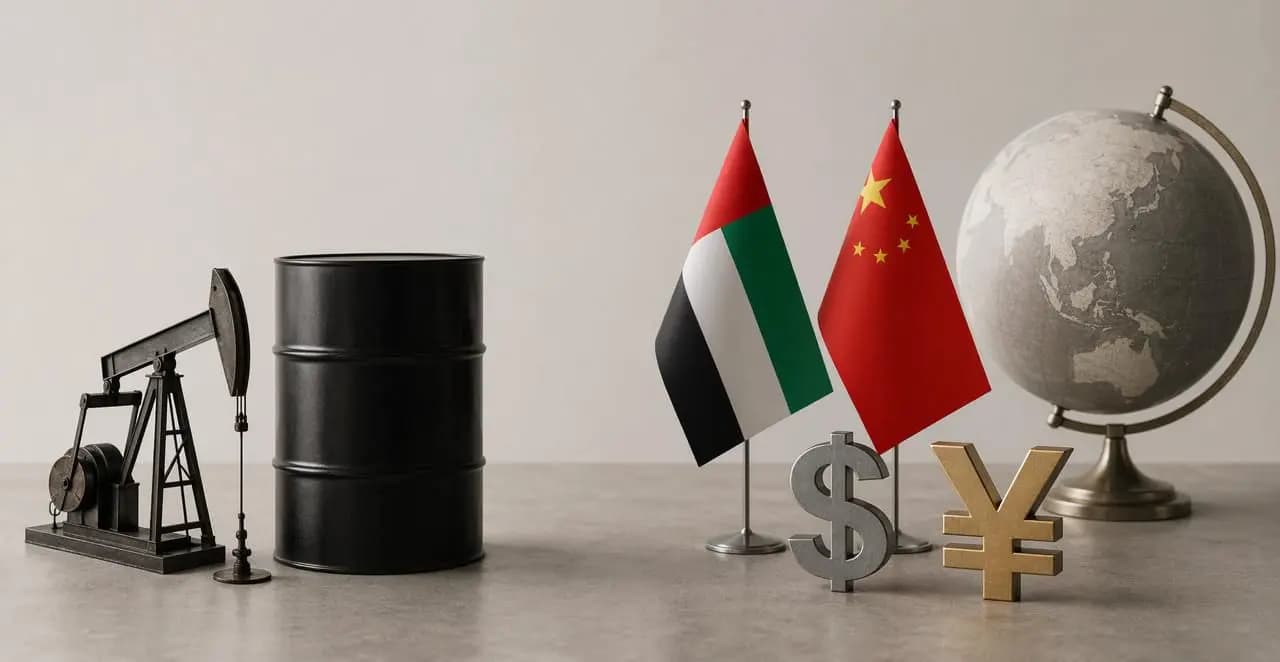
Amid rising tensions around the Strait of Hormuz and worsening relations with Iran, the United Arab Emirates is considering a partial shift from the dollar to the yuan for oil payments.
Experts emphasize that it is not about abandoning the US currency entirely, but rather an attempt to reduce dependence on it amid increasing geopolitical risks.
Economist Baurzhan Shurmanov notes that current processes reflect a broader global trend.
"This is not a rejection of the dollar, but a pragmatic response to risks. The world is gradually moving from the dominance of one currency to a more diversified settlement system," he believes.
According to him, the Gulf countries face a dual dependence — logistical and financial. About 21 million barrels of oil pass through the Strait of Hormuz daily, accounting for nearly a fifth of global consumption.
At the same time, a significant portion of the region's trade with China is conducted through the dollar system, even though final settlements are often linked to the Chinese currency.
"An additional step arises: oil is sold for dollars, which are then converted into yuan. With growing trade turnover, this creates costs that countries seek to eliminate," the expert explained.
According to analysts, the Gulf states account for about 31% of global oil production, and their trade turnover with China reaches $300 billion.
In these conditions, shifting part of settlements to yuan and euros is seen as a step to optimize foreign economic operations. The yuan can be used in trade with China, and the euro in settlements with European partners.
Despite these trends, the dollar's position remains stable. It still accounts for about 58% of global foreign exchange reserves, and about 88% of international settlements involve it.
Experts attribute the gradual diversification of currencies to the growth of US public debt and the use of the financial system as a tool of foreign policy pressure.
"The key change is not the weakening of the dollar, but the strengthening of alternatives. The global financial system is becoming less centralized and more complex. This increases its resilience, but at the same time increases uncertainty," Shurmanov concluded.