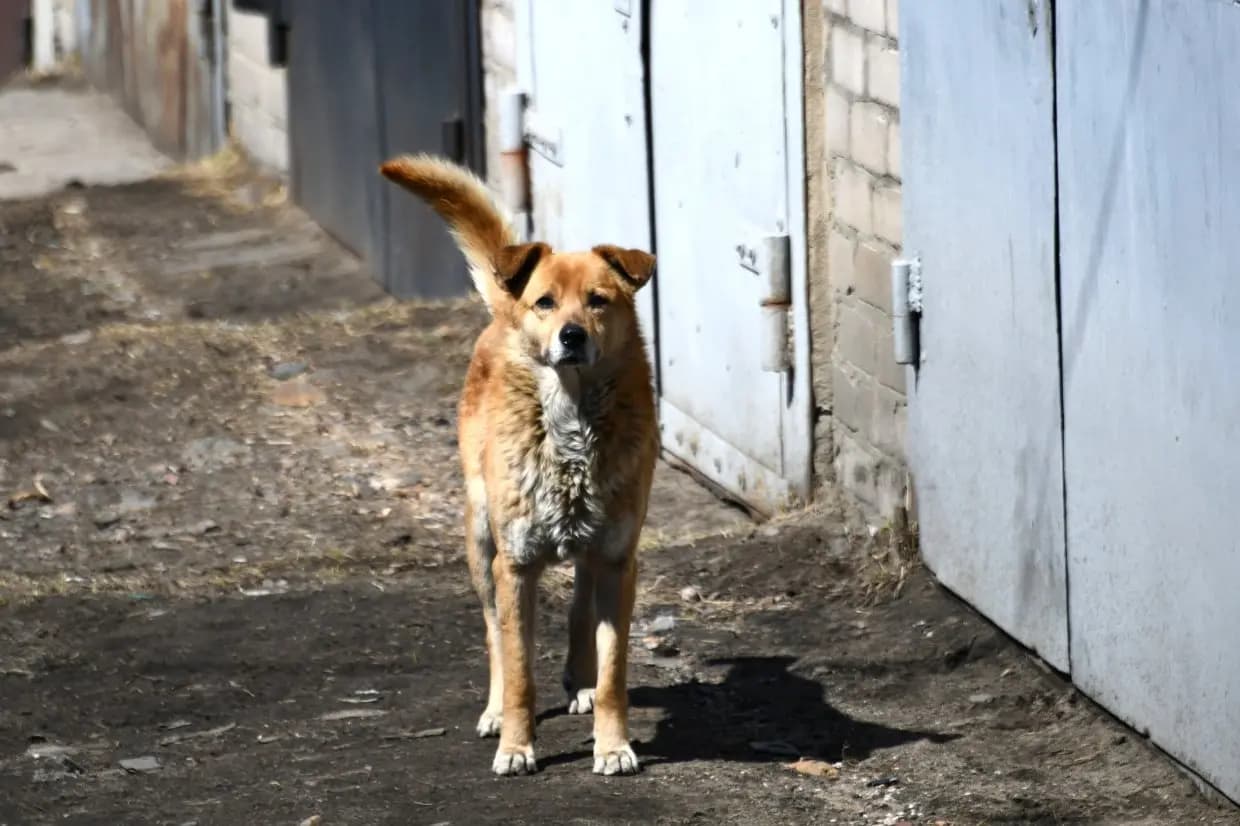
In Kazakhstan, amendments to the law on responsible treatment of animals have been proposed. The bill aims to increase public safety and systematically solve the problem of stray animals, reports Todayinfo.kz.
In Kazakhstan, amendments to the law on responsible treatment of animals have been proposed. The bill aims to increase public safety and systematically solve the problem of stray animals, reports Todayinfo.kz.
The document, developed on the initiative of Mazhilis deputies, provides for improving the system of responsible treatment of animals and forming a humane attitude towards them.
The practice of implementing the current law has shown the need for its refinement and supplementation.
First, the CNVR (catch, neuter, vaccinate, return) system did not yield the expected results. Despite the increase in budget expenditures from 1.2 billion tenge in 2022 to 3 billion tenge in 2025, the number of stray animals has not decreased, but on the contrary, has increased. For example, if in 2022 243.5 thousand animals were caught, then in 2025 this figure reached 276.3 thousand.
Second, the number of dog attacks on people has increased. If in 2022 36.7 thousand cases were registered, then in 2025 their number reached 41.4 thousand. This means an average of 113 attacks per day. Attacks on children and women are especially dangerous. This problem is becoming acute and systemic in society.
Third, international experience shows a trend towards abandoning the CNVR system. A number of European countries, as well as Canada, the USA, Australia, New Zealand, South Korea, Malaysia and Japan, use a non-return capture model. This approach prioritizes the safety of citizens.
The example of Turkey also confirms this. Although the CNVR system was used in this country for 20 years, it did not produce results — the number of stray dogs increased sharply and reached about 4 million. In this regard, in 2024 Turkey abandoned this model.
In India, despite the use of CNVR, according to WHO, this country accounts for 36% of deaths from rabies in the world, with 99% of infections transmitted through dogs.
The proposed bill provides for the following main norms:
• mandatory placement of caught animals in temporary holding points;
• regulation of the number of stray animals through euthanasia.
At the same time, euthanasia will not be applied to cats – the CNVR system is maintained for them. Stray dogs will be sent for euthanasia after 5 days. However, maslikhats can extend this period depending on financial capabilities.
For animals that may have an owner, the holding period is set at 60 days.
Fourth, mandatory chipping of dogs and cats is introduced. This is one of the most important innovations. The problem of stray animals largely arises due to the irresponsibility of owners.
For the first violation, a warning is provided, for the second — a fine, for the third — confiscation of the animal. In addition, the owner is obliged to fully compensate for the damage caused by the animal's actions.
Fifth, public control is introduced. NGOs and animal protection organizations will be able to visit temporary holding points and shelters.
Sixth, administrative and criminal liability of pet owners is strengthened. For cruelty, fines and prison terms are increased.
Thus, the main principles of the bill are order, control, ensuring the safety of citizens and increasing the responsibility of animal owners.
The bill was discussed with the participation of deputies, government agencies, experts and representatives of the public.
During the presentation of the document, Mazhilis deputy Yedil Zhanbyrshin especially emphasized that this initiative is not directed against animals.
"We must understand one thing very clearly: this bill is not a 'law against animals'. This is a law necessary for the safety of people, for order, for the responsibility of owners, for a clear role of the state, and so that humanism does not turn into legal weakness. Humane treatment of animals is correct. However, when humanism replaces reasonable decisions, and under the guise of 'humanity' the state refuses to protect people — this is no longer humanism. This is irresponsibility," he said.
The deputy also noted that compassion for animals should not push human safety into the background.
Especially when it comes to children, pregnant women, the elderly, courtyards, streets, schools and public places. The adoption of this bill will reduce the number of stray dogs, reduce the number of attacks, increase responsibility and strengthen the safety of citizens," Yedil Zhanbyrshin emphasized.
The deputies also stated that the law should work in real life.
"The law should work not only in presentations or reports, but in the yard, on the street, near the school — where a person should feel safe. If today we can take a step that will reduce bites, attacks and tragic incidents, then we are obliged to take it," said Yedil Zhanbyrshin.